

Time To Talk
Early emotional support for young people aged 11–25
What We Offer
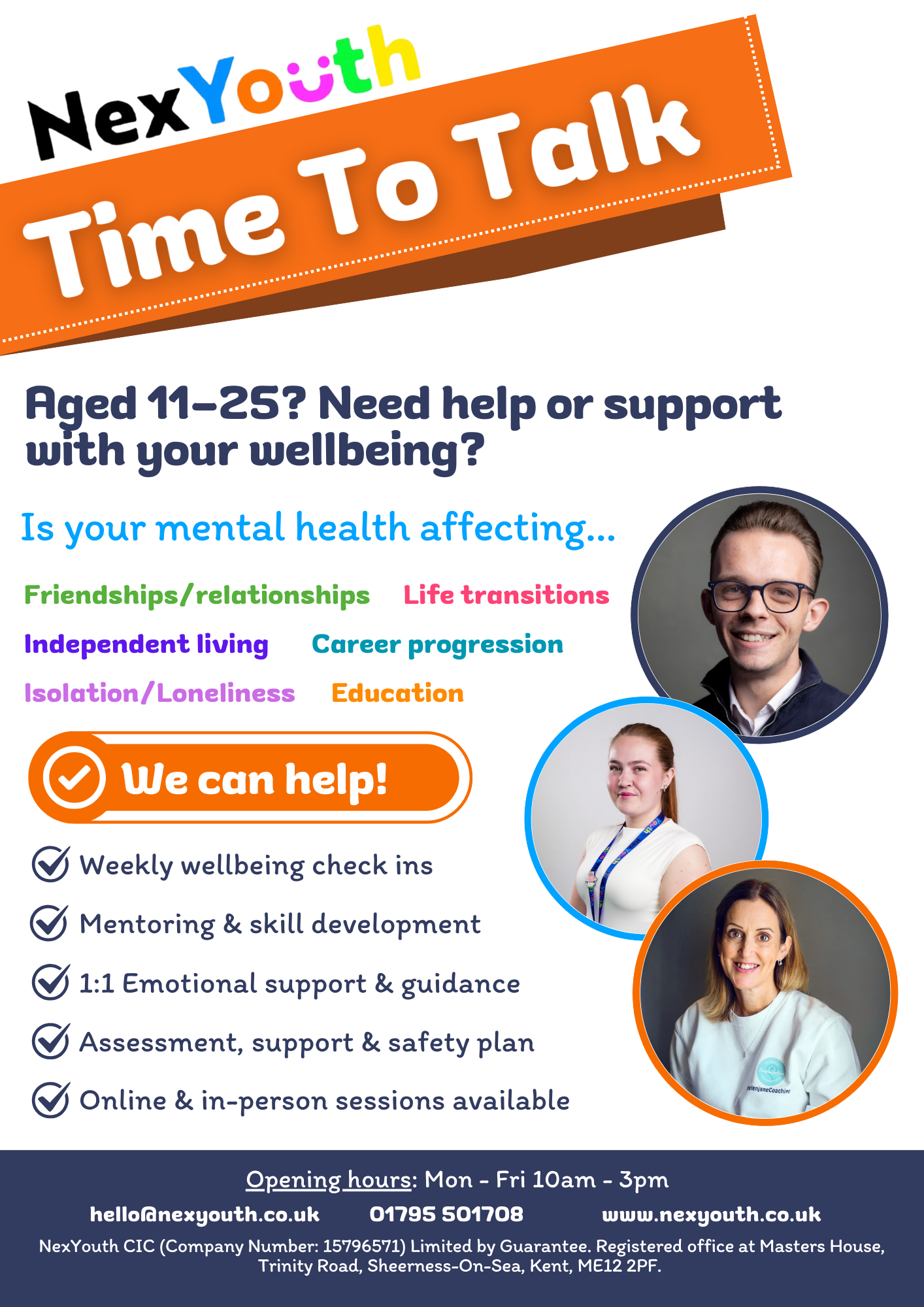
Time2Talk is a multi-disciplinary support service for children, young people and young adults aged 11–25 experiencing emotional, behavioural, social or mental health challenges, including those who are neurodivergent or facing difficulties that impact their daily lives. The service offers a range of tailored interventions designed to help young people improve their emotional wellbeing, build resilience, develop coping strategies and achieve positive outcomes. We offer 3 levels of support:
-
Tier 1 intervention provides practical, emotional and advocacy-based support for young people experiencing emerging or low-level difficulties that can be addressed through short-term intervention.
Young people can access:
One-to-one emotional wellbeing support.
Advice and guidance.
Advocacy and representation.
Signposting to community and specialist services.
Support to access education, health and social care services.
Goal-setting and action planning.
Emotional wellbeing resources and self-help tools.
Safety planning where appropriate.
Parent/carer liaison where consent is provided.
-
Tier 2 support provides structured, goal-focused mentoring interventions for young people experiencing more complex emotional, social or behavioural challenges that require ongoing support.
Young people can access:
One-to-one mentoring sessions.
Individual support planning.
Goal setting and review.
Emotional wellbeing support.
Confidence and self-esteem development.
Emotional regulation strategies.
Coping skills development.
Education, employment and training support.
Community engagement opportunities.
Advocacy and coordination with professionals where required.
-
Tier 3 support provides professional therapeutic support for young people experiencing significant emotional distress, mental health difficulties or complex life experiences impacting their wellbeing.
Young people can access:
One-to-one counselling.
Person-centred therapeutic support.
Exploration of thoughts, feelings and experiences.
Emotional processing and reflection.
Development of coping strategies.
Trauma-informed interventions.
Therapeutic goal setting and review.
Risk assessment and safety planning where required.